
Published August 21, 2026 · WaterCare Crew
Do You Need to Blow Out Sprinklers in Northeast Florida? A Zone-9 Answer
The short version
You almost never need a compressed-air sprinkler blowout in Northeast Florida. The ground here does not freeze deep enough or long enough to split buried PVC. What you do need is a winter controller adjustment, backflow protection for hard freezes, and a spring checkup before heavy irrigation season starts back up.
Why blowouts are standard up north and not here
Sprinkler blowouts exist to solve one specific problem: water trapped in irrigation pipe that freezes solid, expands, and cracks the pipe. In climates where the frost line drops below eight inches for weeks at a time, a compressed-air purge is the only reliable way to keep an underground system alive through winter.
Northeast Florida sits in USDA Hardiness Zone 9. Bunnell, Palm Coast, Ormond Beach, St. Augustine, DeLand, and Palatka all see occasional overnight frosts, and a few hours below freezing per year, but not the sustained multi-week deep freezes that fracture buried irrigation lines. Systems in Flagler, Volusia, St. Johns, Putnam, and Duval Counties are almost always safe to leave charged through the season.
What can still get damaged in a Florida cold snap
The parts of a Northeast Florida irrigation system that are actually vulnerable to a hard freeze are the ones sitting above ground:
- Backflow preventer. The brass body holds standing water and can crack in a single hard freeze night. This is the most common freeze-damage repair we see.
- Exposed valves and PVC risers. Any piping that sits above grade near the pump or wellhead is at risk.
- Pump housing on shallow well systems. Jet pumps sitting in an unheated pump house or exposed to open air can freeze if left with standing water.
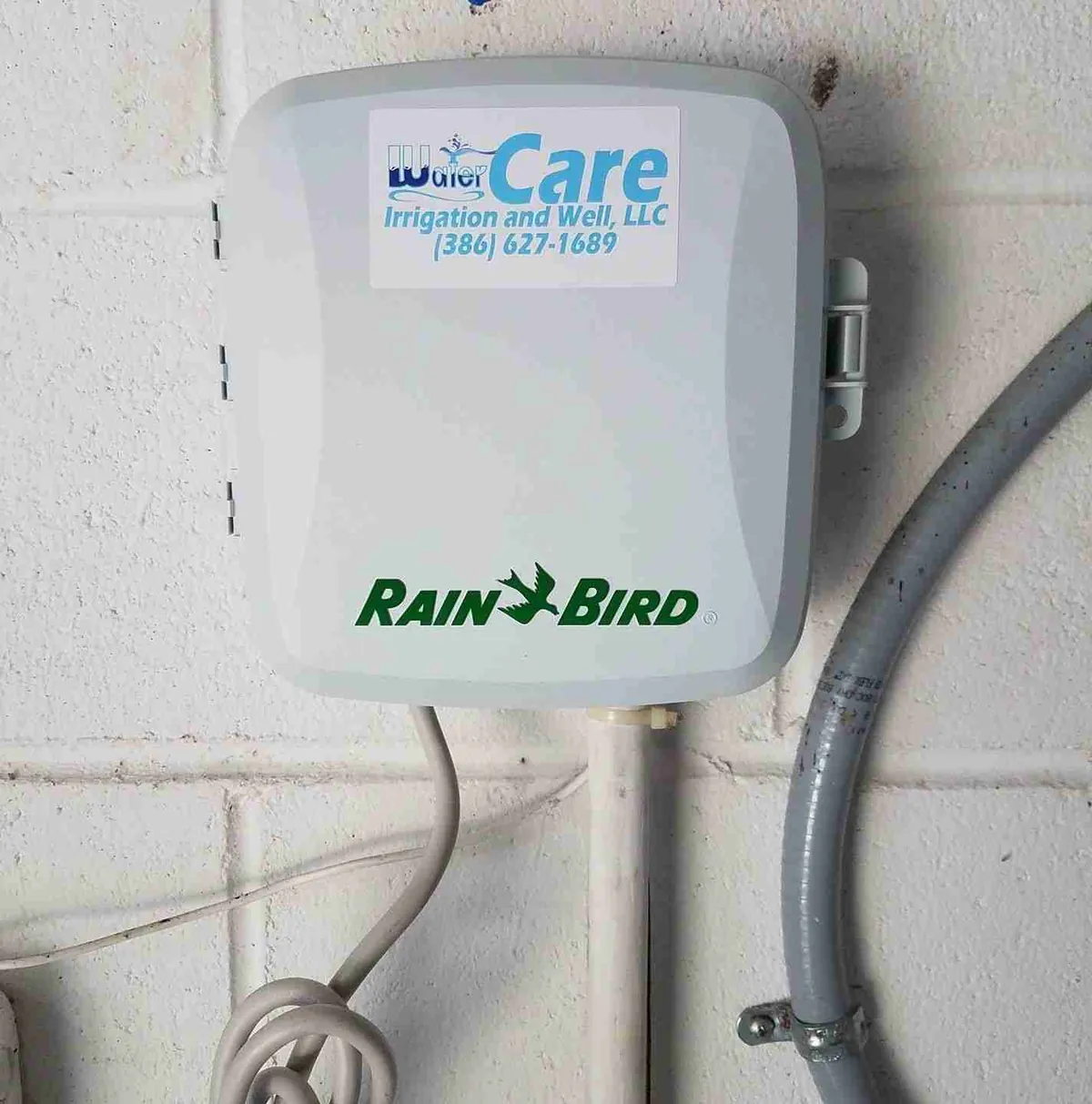
- Rain sensors and controller enclosures mounted outdoors. Rare, but freezing rain can trip sensors and shorten the life of wire connections.
Insulating the backflow with a foam cover, wrapping exposed plumbing, and shielding the pump housing on nights forecast below 30°F handles almost every real freeze risk in this climate.
The winter setting most Florida controllers get wrong
The bigger seasonal issue in Northeast Florida is not freeze damage, it is overwatering. A summer schedule that ran three or four times a week is far too much water in December through February, when evapotranspiration drops and the lawn goes semi-dormant. Two typical problems we see on winter service calls:
- Homeowners forget to reduce run frequency and end up watering a dormant lawn on a schedule that made sense in August. Water bills stay high for no benefit to the grass.
- Homeowners turn the controller fully off. Valves that sit unused for three months are more likely to stick when they are cycled again in spring, and the controller battery can drain if the system is completely dead through winter.
The right winter setting for most residential systems in our territory is once every 10 to 14 days, run early in the morning, with the rain sensor doing its job to skip cycles after a front moves through. If you have never adjusted the schedule seasonally, our residential irrigation repair team can walk through it with you at the next service call.
A better checklist than a blowout
Here is what WaterCare actually recommends for Northeast Florida customers between November and February:
- Wrap the backflow preventer before the first hard freeze forecast. Foam covers are inexpensive and available at any hardware store.
- Adjust the controller to reduce watering frequency to every 10 to 14 days instead of turning the system off completely.
- Walk the zones once in December. Look for heads that leaked all summer, listen for a valve that hisses, and note anything that needs a spring visit.
- Check the well pump area for exposed plumbing, especially on older shallow well installs, and insulate anything above grade.
- Book a spring tune-up in late February. This is when broken heads, bad valves, and controller programming errors get caught before your March water bill lands.
When a blowout does make sense
There are two specific cases where a partial system drain is worth doing in our climate. First, if you have an unusually exposed system with long runs of shallow-buried PVC or above-grade laterals feeding a barn, garden bed, or outbuilding. Second, seasonal properties that will sit unused for four to six months. In those cases we can drain the low points and cap the system rather than run a full compressed-air blowout, which is faster and less stressful on aging fittings.