How Deep Are Wells in Flagler County Florida?
A residential well depth guide for Palm Coast, Bunnell and Flagler Beach.
Short answer:
Residential wells in Flagler County, Florida are typically either shallow wells drilled 80 to 100 feet deep or deep wells drilled 130 to 150 feet into the Floridan aquifer. Most Palm Coast homes are connected to city water. Wells in Palm Coast are primarily used for irrigation. WaterCare Irrigation and Well evaluates your property before recommending a well depth.
Two Aquifer Options for Flagler County Wells
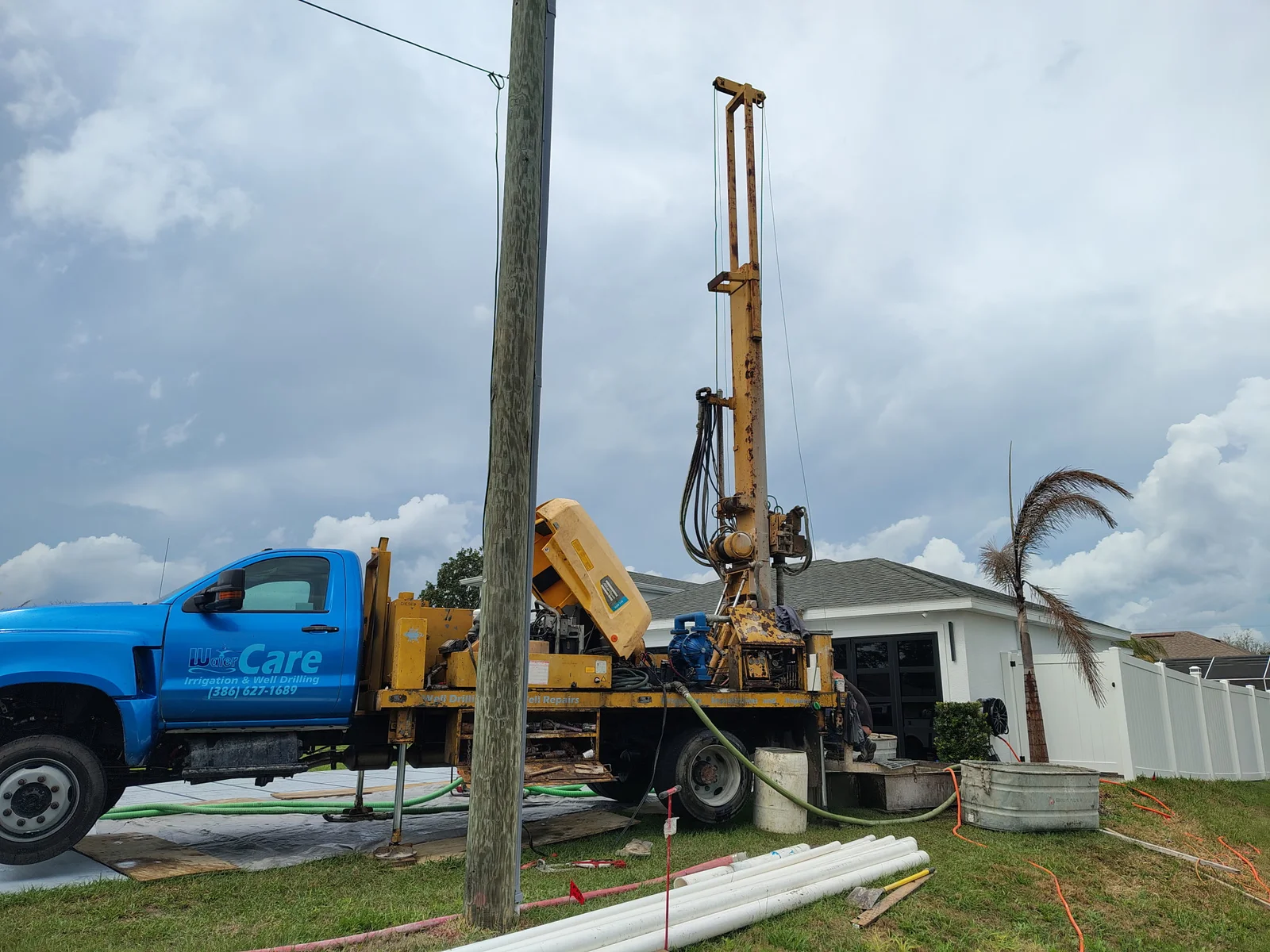
Flagler County sits above two distinct water sources. Shallow wells in this region are typically drilled 80 to 100 feet deep and draw water that filters through sandy Florida soils. Deep wells reach the Floridan aquifer at 130 to 150 feet and provide more consistent water volume year-round. Most Flagler County well drillers recommend the Floridan aquifer for residential use because it offers better flow rates and more stable water quality, though deep well water can carry natural sulfur, which causes a rotten-egg smell.
Factors That Affect Well Depth in Northeast Florida
Several local conditions determine how deep your Flagler County well needs to be. Proximity to the coast near Flagler Beach may require deeper drilling to avoid saltwater intrusion. Properties closer to the St. Johns River or low-lying areas around Bunnell might encounter the Floridan aquifer at shallower depths. Soil composition, existing neighborhood wells, and your household water demand all influence the final depth. A qualified well driller evaluates these factors during a site assessment before recommending a drilling depth for your Palm Coast or Flagler County property.
Permitting Requirements for Flagler County Well Drilling
Most well work in Florida requires permits, typically through the St. Johns River Water Management District and the Flagler County Health Department, though your local requirements may vary. The permitting process ensures wells meet minimum depth requirements, proper casing standards, and setback distances from septic systems. Diameter requirements vary; check with SJRWMD for the rules that apply to your well. Your well drilling contractor handles permit applications and ensures your new well meets all Northeast Florida regulatory standards.
Common Water Quality Issues at Different Depths
Shallow surficial wells in Flagler County sometimes produce water with tannins from organic matter in sandy soils. Shallow wells also often carry dissolved iron that can stain fixtures, driveways, and landscaping. Deeper Floridan aquifer wells draw naturally iron-free water, though they can contain hydrogen sulfide, which creates a rotten-egg smell. Understanding typical water quality at different depths helps Northeast Florida homeowners choose the right well type when installing a new well.
When to Consider Well Depth for Irrigation vs. Household Use
Some Flagler County properties use separate wells for irrigation and household water. A shallower irrigation well may suffice for sprinkler systems since water quality matters less for lawn care. Household wells serving drinking water, cooking, and bathing, such as those in Bunnell, Florida, typically need deeper drilling into the Floridan aquifer for better quality and consistent flow. Property owners in Palm Coast subdivisions should check HOA regulations and existing neighborhood well depths before planning new well construction. See our residential well and pump services page for how we scope a new well.
Shallow vs. deep wells in Flagler County at a glance
| Well type | Typical depth | Water quality | Flow | Common use |
|---|---|---|---|---|
| Surficial Aquifer | 80 to 100 feet | May contain iron and tannins, variable quality | Seasonal fluctuation | Irrigation wells |
| Floridan Aquifer | 130 to 150 feet | Naturally iron-free; may contain sulfur | Stable year-round | Household supply wells |
Frequently asked questions
Do I need a permit to drill a well in Flagler County Florida? +
Why does my Flagler County well water smell like rotten eggs? +
How long does it take to drill a residential well in Palm Coast? +
Can I use a shallow well for my irrigation system in Flagler County? +
Planning a New Well in Flagler County?
WaterCare evaluates the property and scopes depth before quoting. Call (386) 627-1689.
Schedule a Consultation